Boulder Falls faces permanent closure after rockslide: ‘Pretty likely it’s gonna squish somebody’
After a significant rockfall at Boulder Falls last November, the City of Boulder is weighing whether to relocate the viewing area farther from the falls or permanently close trail access.
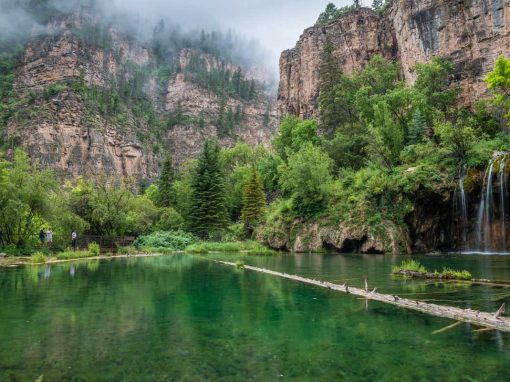
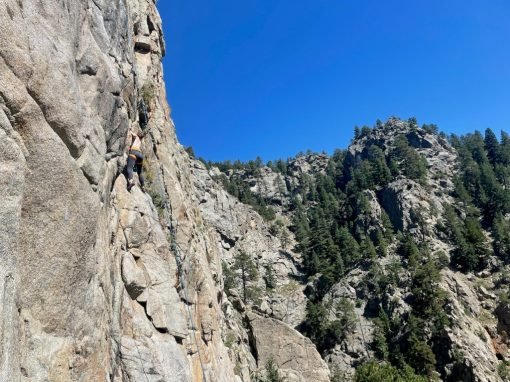
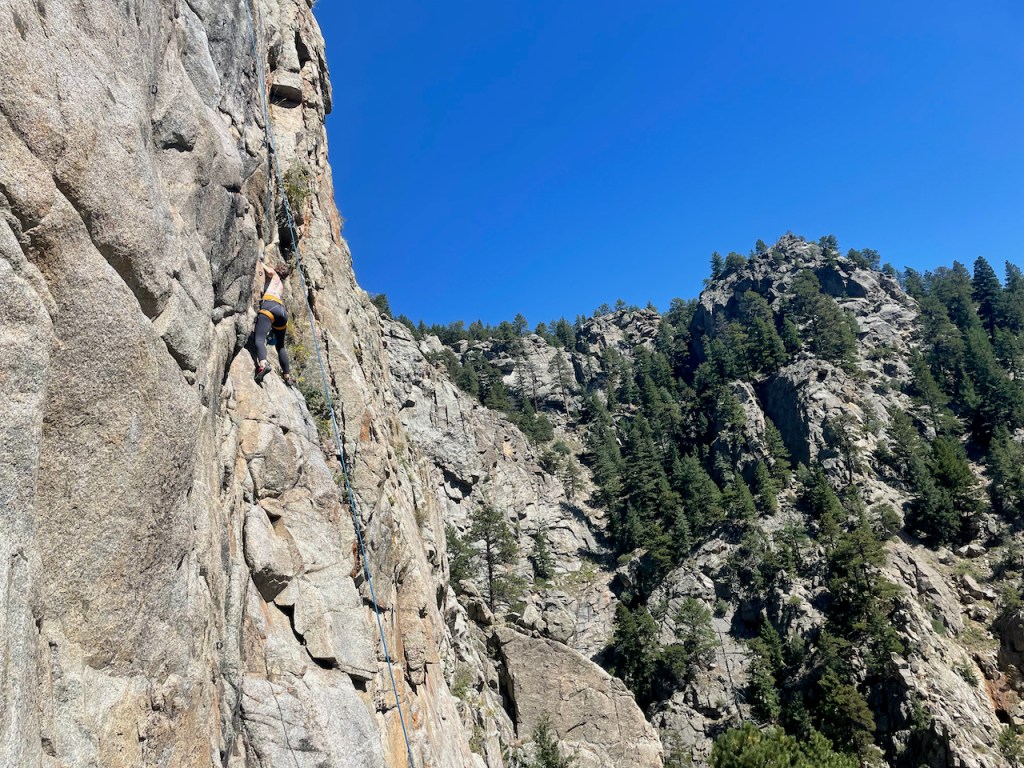
Boulder Falls, located 11 miles up Boulder Canyon Drive, features a short hike to a waterfall and access to Plotinus Wall, a popular climbing area. In 2023, the city recorded 261,000 visits to the site. However, access has been closed indefinitely since the November rockslide, which sent large rocks down the western slope and damaged key infrastructure. Consultants recently concluded the site carries a high risk of ongoing, potentially catastrophic rockfall events that could cause serious injuries or fatalities.
“Given this report, we cannot put the trail back in its previous alignment,” Hilary Dees, a senior manager of visitor infrastructure for the city, told the Open Space Board of Trustees in an August meeting. “Visitation at Boulder Falls will look different than what the public has grown used to.”
The city is soliciting geotechnical analysis for two different potential locations for viewing platforms for the falls. One would be located where climbing access currently splits from the trail, and the other would be “very close to the road,” which would make the trail — already only 0.1 miles long —“quite short.” Consultants will present their preferred location in early 2026. If both locations are deemed inadequate, “the third option is permanent closure,” Dees told the board.
A long history of issues
Boulder Falls is popular with tourists, locals and climbers, and Dees said that rangers are constantly asked when the site will reopen.
“It is one of the best places to take people who are visiting,” she said. “It’s so easy to get to, the payoff is so nice, and I think that’s one of the reasons it’s so popular. So we recognize the importance of this.”
The city has been managing rockfall at Boulder Falls since 1993 with infrastructure like erosion netting and gabion baskets — barriers made of rocks in wired cages designed to mitigate erosion and catch rockslides. But Dees said the area cannot be made fully safe, and despite past attempts to manage risk, it has often faced major closures.
“In recent history, it’s been closed almost as much as it’s been opened,” she said. Boulder’s 2009 flash flood closed Boulder Falls for years, and 2018 construction to reopen the trail cost $1.23 million. The November 2024 rockfall that has kept the trail closed for the past year damaged the trail and several gabion baskets. In one case, the force of the rockfall was so severe a gabion basket didn’t just topple — a common failure— but “exploded open,” spilling tons of stone onto the trail. Dees also described large stones “bouncing” up to 17 feet in the air, down the slope, across the creek and up the opposite slope.
“Bouncing is not usually a verb I use for those big boulders, but there was so much velocity with these stones that they literally went up the other side of the creek,” she said. “It’s really impressive, but I don’t love that we had a trail at the bottom of it.”
Further mitigation could include a combination of drilling bolts into the rock face, adding anchored mesh, targeted scaling of unstable rock and installing rockfall fences and mesh barriers, all expensive and complex to implement.
“Every single way that we can mitigate will require the use of helicopters and specialty contractors,” Dees said. She estimated the cost of further mitigation at around $7 million.
That’s “an extremely high number for quite a short trail,” she added, suggesting it may not be worth it given the city’s other needs. Any stabilization measures would also require ongoing maintenance or replacement.
Climbers disobeying the closure
While the area remains closed, some people are ignoring the restrictions. In June, OSMP installed a trail camera for six weeks and counted over 90 people crossing into the Boulder Falls trail.
OSMP Board of Trustees member Brady Robinson asked staff whether they’re taking steps to enforce the closure, particularly among climbers.

Dees said the city has updated Mountain Project with closure information, and added signage and a chain-link fence. But Robinson, a climber himself, said people have been jumping the fence to reach Plotinus Wall.
“It’s a really sweet place to go climbing,” he said. For climbers who often travel on dangerous slopes, “this is a classic [case of] likelihood versus consequence. The likelihood on any given day for something catastrophic to happen is very low, and so for an individual climber, they’re not too worried about it.”
“But as managers, we have to be,” he added. “Because people are going to be there basically all the time. And the next time a big rock comes down, it’s pretty likely it’s gonna squish somebody.”
In response, Dees urged the climbing community to honor the closure, not just for their own safety, but also for the safety of rescue teams that may need to enter the area if someone is injured. Climbers can still access Plotinus Wall by hiking in from the Upper Dream Canyon climbing area, off Sugarloaf Road.