
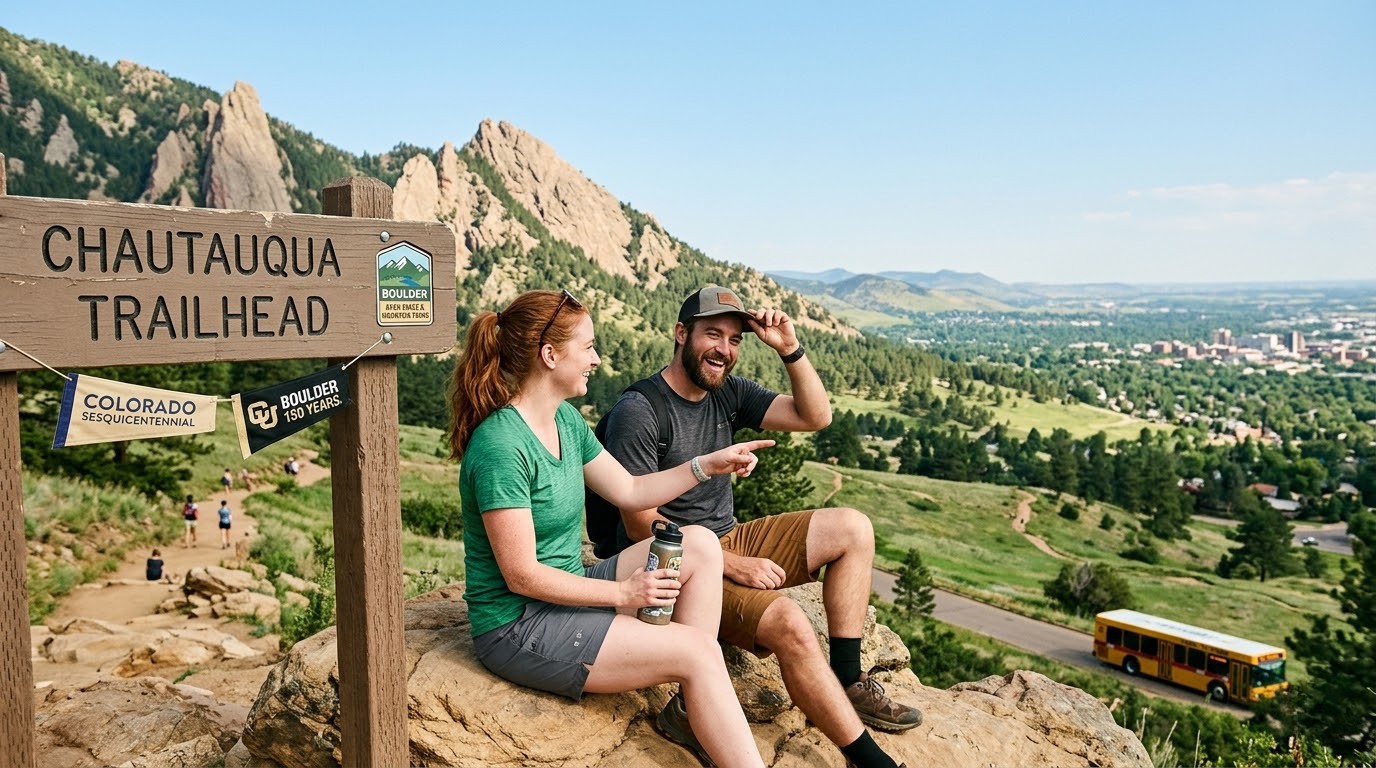
There is a peculiar quality to the air in Boulder during the summer months—a thinness that suggests both clarity and a certain fragile beauty. As we move into 2026, that atmosphere feels weightier, charged with the significance of a sesquicentennial milestone. It is a summer of high altitudes and, remarkably, zero-dollar aspirations. In a world increasingly defined by the "pay-to-play" model of leisure, Boulder stands as a curious case study in civic generosity, offering a "Big Year" that invites us to celebrate 150 years of history without touching a savings account.
The Birthday Bashes: Colorado & CU Turn 150
To understand the Boulder of 2026, one must appreciate the symmetry of the calendar. Both the State of Colorado and the University of Colorado (CU) are celebrating their 150th anniversaries. Known as the Sesquicentennial, this milestone transforms the city from a standard summer destination into a living historical archive. This isn't just about dates on a plaque; it’s about a citywide commitment to making culture accessible to everyone.
The Colorado Day Milestone (August 1, 2026) On August 1st, Colorado officially turns 150. Boulder serves as a primary hub for the festivities. The University of Colorado campus—founded in 1876, the same year Colorado achieved statehood—will host a series of free "Storytelling Pavilions." These are not your typical dry museum exhibits. Expect interactive oral histories, archival photo galleries displayed on the lawns of Old Main, and student-led tours that dive into the complex history of the Flatirons and the Indigenous peoples who first called this landscape home. Engaging with these exhibits costs nothing but provides a profound connection to the land beneath your boots.
Chautauqua’s Cultural Legacy The Colorado Chautauqua, a National Historic Landmark, remains the crown jewel of Boulder’s free cultural offerings. Born out of the 19th-century movement to bring education and entertainment to the masses, it continues that mission in 2026. "Meadow Music" on Monday nights is a local rite of passage. Families spread blankets on the grass as the shadows of the Flatirons stretch toward the city, enjoying performances that range from classical quartets to bluegrass. It is a reminder that in Boulder, the most prestigious seat in the house is often a patch of grass available to anyone with a blanket.
The 2026 Trail Expansion: Prairie Run Open Space
While we honor 150 years of history, 2026 also marks the beginning of a new chapter in Boulder’s conservation story. The most anticipated event of the season is the grand opening of the Prairie Run Open Space. This 1,377-acre expanse, located at the confluence of Boulder and Coal Creeks, represents the city’s largest open-space acquisition in recent years.
Exploring the Sun Stride Trail The flagship of this new area is the Sun Stride Trail. Unlike the rocky, vertical climbs found at Chautauqua, Prairie Run offers a horizontal grace. This trail is a haven for birdwatchers and those seeking solitude away from the crowded peaks. In early summer 2026, the wildflowers here are expected to be spectacular, providing a vibrant foreground for the jagged Front Range peaks in the distance. Because this is a brand-new opening, there is a certain "first-mover" excitement among locals. To experience it for free, park at the Kingbird Crossing trailhead, which features new eco-friendly facilities and educational kiosks explaining the prairie restoration efforts.
The Civic Area Phase II Glow-Up If you prefer your nature with a side of urban convenience, the completion of the Civic Area Phase II nature play spaces is a game-changer. Located near the Boulder Public Library, this area has been reimagined as a sanctuary for lounging. It features "nature play" structures for kids, limestone seating along the creek, and expanded pollinator gardens. It is the perfect spot for a "zero-dollar date"—pack a sandwich, grab a book from the library, and spend three hours listening to the rush of the creek without spending a dime. This site serves as a vital bridge between the urban bustle of downtown and the wild energy of the mountains.
Mid-Week Magic: Breaking the Weekend Habit
The secret to "Living Your Best Life" in Boulder is simple: do what the tourists do, but do it on a Tuesday. The city’s mid-week programming in 2026 is specifically designed to reward those who can escape the weekend crowds. By shifting your schedule, you not only save money but also gain a sense of solitude that is nearly impossible to find on a Saturday afternoon.
Bands on the Bricks (Wednesdays, June 10 – July 29) Pearl Street Mall is the heart of the city, and on Wednesday nights, that heart beats to the sound of live music. Bands on the Bricks is a free outdoor concert series that brings together everyone from tech CEOs to wandering travelers. There is something philosophically beautiful about dancing on the bricks—an act of joyful defiance where the music is loud, the energy is high, and the entry fee is non-existent. For the 150th anniversary year, the 2026 lineup is expected to feature "Colorado Originals," celebrating musicians who got their start in the Rockies before hitting the national stage.
The Tebo Train and Family Traditions If you are traveling with children, the Tebo Train is an essential freebie. This electric-powered mini-train runs up and down the Pearl Street Mall from late May through early September. It’s a 15-minute ride that provides endless entertainment for toddlers, allowing parents to sit back and soak in the street performers. Speaking of performers, the Pearl Street buskers—from the "Zip-Code Man" to world-class contortionists—provide free entertainment daily. While a small tip is good karma, watching the show is a staple of the Boulder budget experience.
The BMoCA "Pay From Your Heart" Model The Boulder Museum of Contemporary Art (BMoCA) continues to be a leader in the "democratic art" movement. Their "Pay From Your Heart" model means that entry is essentially free, inviting you to contribute only what you can afford. In 2026, their summer exhibition, "The Sesquicentennial Eye," features contemporary artists' interpretations of Colorado’s 150-year journey. It is a cool, air-conditioned sanctuary for hot July afternoons.
The Great Outdoors: A Masterclass in Public Policy
Boulder’s 155 miles of trails didn't happen by accident. They are the result of visionary planning. When you hike here, you are walking through a landscape that was saved by a community that valued its views more than its real estate profits.
The "Park-to-Park" Life Hack In 2026, the biggest mistake you can make is trying to drive your own car to a major trailhead. Parking at Chautauqua or the Flatirons is not only expensive ($30+ for some lots) but often impossible. The free Park-to-Park shuttle is your golden ticket. It runs every weekend and holiday, picking up from free satellite lots downtown and at New Vista High School. Not only do you save money, but you also help reduce the carbon footprint on the very trails you’re about to hike.
Essential Free Hikes for Your 2026 Bucket List:
-
The First Flatiron: This is the iconic 2.6-mile round trip. It’s a steep climb that rewards you with a "top of the world" feeling. In 2026, look for the special sesquicentennial markers at the summit that explain the unique geology of these 300-million-year-old rock formations.
-
Mount Sanitas: The local favorite for a workout. It’s a 3.1-mile loop that offers a panoramic view of the Denver skyline to the east and the snow-capped Indian Peaks Wilderness to the west.
-
The Boulder Creek Path: For a more relaxed experience, this 7-mile paved path follows the water through the center of town. It’s perfect for biking, skating, or a slow sunset stroll. In the heat of July, the shade from the massive cottonwood trees provides a natural air conditioning that is entirely free.
Real Talk: How Not to Be "That Tourist"
Living your best life in a popular destination requires tactical humility. In 2026, Boulder expects record crowds for the 150th anniversary. To enjoy the city like a local, you must adopt the "Local Mantras."
Sunrise or Bust If you arrive at the Flatirons at 10:00 AM, you’ve already missed the best part of the day. Locals hit the trails at 5:30 AM. Why? To catch the "Boulder Glow." This is a 15-minute window when the rising sun hits the red sandstone of the Flatirons, turning the entire mountain range into a glowing ember. It is a spiritual experience that costs zero dollars but requires an early alarm clock.
Respect the Quiet Boulder is a city of tensions. On "The Hill," the energy of 30,000 students meets the quietude of historic residential neighborhoods. Be mindful of the noise ordinances. Similarly, on the trails, the "yield to the uphill hiker" rule is sacred. In 2026, as trail usage reaches an all-time high, your best tool for a free and fun summer is simple politeness.
The Permit Debate As we move through 2026, keep an eye on the City of Boulder’s Open Space and Mountain Parks (OSMP) website. To manage the sesquicentennial crowds, some trailheads may implement free "Timed Entry" permits. These are easy to secure online but are mandatory for access during peak hours. Being a responsible steward means checking these updates before you lace up your boots.
Summer is Short, Memories are Free
As the sun sets over the 2026 season, we are reminded that the best things Boulder offers are those that cannot be owned. The "Boulder glow" is not found in a boutique on Pearl Street, but in the physical exhaustion after a hike up Sanitas, the resonance of a free concert on the bricks, and the shared history of a 150-year-old experiment in the New West. Grab your water bottle, lace up your sneakers, and step outside. The summer is short, the air is thin, but the entry is free.

0 Comments